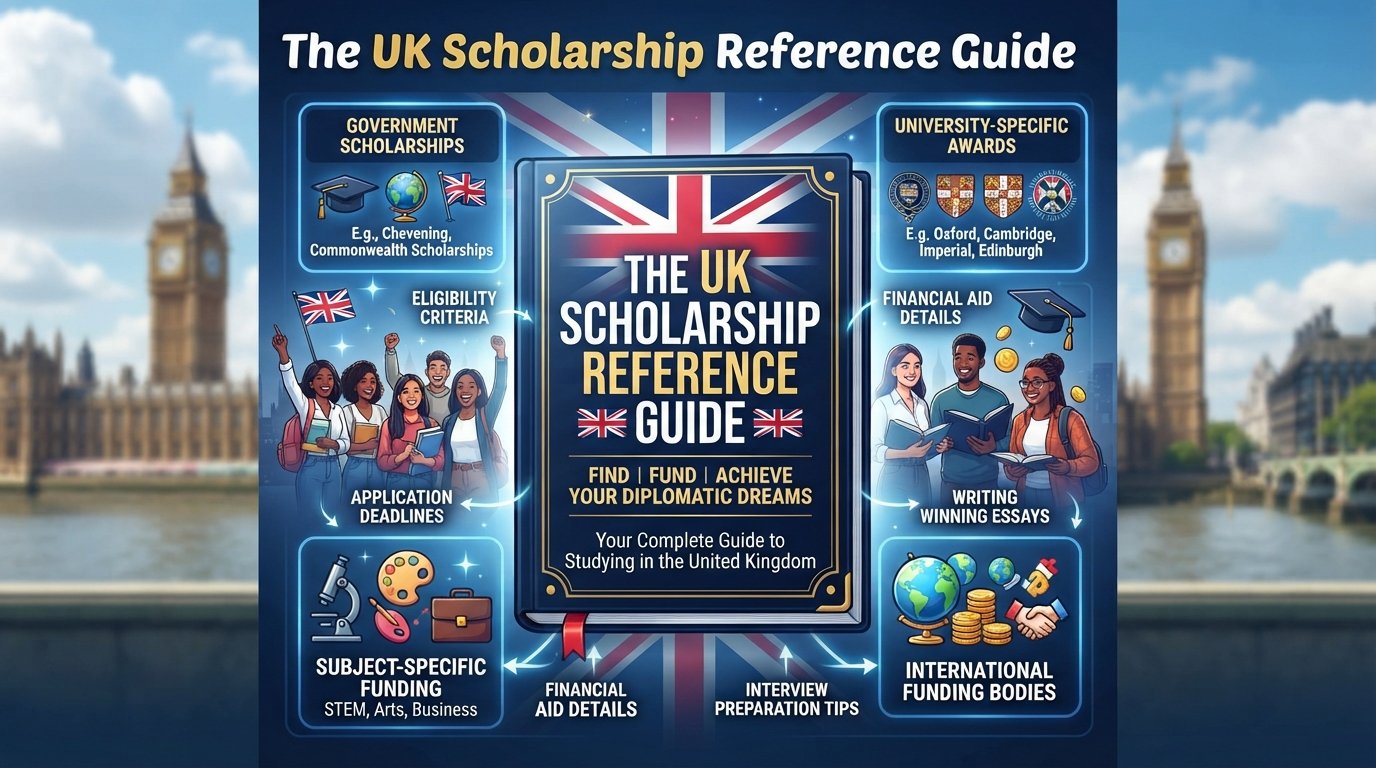
Introduction to Scholarship References
A reference is the documents to required when applying for a scholarship. This guide covers what a reference is, how to write one, and the different types of references that exist.
Understanding the Purpose of a Reference
Defining the Document
A reference is a document or a letter that highlights academic strengths, character, and potential for success. When you applying for a fully funded scholarship, the scholarship panel or body wants to know who the applicant is not just from what the applicant says about themselves, but from people who know them either academically, professionally, or through a volunteering experience. That’s why there are different types of references.
An academic reference comes from an academic professor or teacher. For example, when applying for a master’s degree, an academic reference would typically come from a professor worked with during undergrad, or a teacher or lecturer who knows the applicant academically and can touch for their academic or research skills.
Different Types of Scholarship References
| Reference Type | Who Writes It? | What It Highlights |
|---|---|---|
| Academic Reference | Professor, lecturer, or teacher | Academic performance, research, writing skills |
| Employer Reference | Employer or supervisor | Leadership, work ethic, teamwork, communication |
| Personal Reference | Mentor or consultant | Character, initiative, personal qualities |
| Volunteer Reference | Volunteer coordinator | Volunteering experience, skills, strengths |
The Academic Reference
It’s important to get someone who actually knows the applicant perhaps someone they have done a research project with, or someone who supervised their dissertation. That would be one of the best academics able to write a strong reference.
The second type is the employer’s reference or supervisor reference. An employer is someone who knows the applicant professionally. An employer’s reference will highlight leadership skills, work ethic, teamworking skills, and communication skills. These are the kinds of skills that a professional or employer’s reference will highlight. Getting a manager or someone worked with in a high capacity to write this reference is the ideal approach.
Personal Mentors and Consultant
When submitting a personal reference, scholarship documents will usually state that family members should not be asked. The reference should come from someone who knows the applicant personally but is not a family member. The best people for this are mentors or Consultant, because they know the applicant personally and can highlight their strengths leadership skills developed through mentoring or coaching, communication skills, or the ability to take initiative. These are people who know the applicant on a personal level and have guided them, putting them in the best position to write a personal reference.
Volunteer Coordinator Reference
Another type of reference that can be obtained is from a volunteer coordinator. If there is volunteering experience for example, without a professional work history but with experience volunteering in an organization the volunteer coordinator or whoever was in charge of that experience can write a reference. They can highlight strengths and skills developed during the volunteering experience.
Most times, applicants may be asked to submit a reference letter, which means the referee has to write an actual letter and submit it. Other times, there may already be a form that the referee simply fills in. Those forms are usually more straightforward, with set questions often yes or no questions that the referee completes and sends back.
Managing the Submission Process
Time and Referee Awareness
It’s important to let referees know in advance that they will be receiving an email from the university or scholarship body requesting the reference. Deadlines are sometimes given for when the referee must submit, and missing that deadline because the referee was unaware of the email would be an unfortunate way to lose an opportunity. Always inform referees to expect an email.
Communication and Delivery Methods
Sometimes the scholarship body may ask that the reference be sent to the applicant first, who then forwards it to the referee. Other times, they will ask directly for the referee’s email address and contact them directly.
When it comes to what to include in a reference letter, the first paragraph should establish the referee’s relationship with the applicant not a family relationship, but how they know the applicant professionally or academically.
Main Components of a Strong Reference
Establishing the Relationship and Background
In one example of an academic reference, the professor mentioned that she is a professor in the department of obstetrics and gynecology at the university and stated: “I am pleased to know Dr. Dakbo is planning to enroll in a graduate program at a prestigious institution. I came to know Dr. Dakbo while teaching her in the course of obstetrics and gynecology and subsequently supervising her in her final diploma research work in this course.” She then included the title of the course and the research project.
In that first paragraph, the referee had already highlighted how she knows the applicant as a supervisor on a research project which establishes her as a suitable person to write an academic reference. Whether the referee is an employer, mentor, or academic, the relationship should be clearly stated in the first paragraph.
Mention Academic Strengths and Writing
After mentioning the course title and research context, the academic referee wrote: “She submitted an exceptionally well researched project. She is one of the very best students that I have taught and supervised in respect of her writing and research skills.” This highlights academic strength specifically writing and research skills, which are particularly important when applying for a master’s degree where dissertations and written assessments are central. An academic referee should highlight that the applicant has strong research and writing skills. An employer, on the other hand, would be best positioned to highlight leadership skills or other professional competencies.
Research and Leadership Skills
The reference should also include the applicant’s character and personal qualities. Alongside skills like leadership, academic ability, writing, and research, personal qualities and character traits are important to include.
Discussing Character and Personal Qualities
An example from a real reference reads: “Dr. Fin John has an excellent ability to recognize issues and identify solutions. Her intelligence is reflected in her grades as He graduated with a distinction from Aresh University and was among the highest in the class. He is excellent communication and leadership skills. I’ve known her to be an excellent leader during work as a course group leader in the university for 5 years and he always worked hand in hand with me and other lecturers for the effective management of all her courses. On a personal level he is a well disciplined and materlistic student with a pleasant personality. He puts in a lot of potentional in work and dedication in her research projects.”
This section mention not just academic or leadership skills, but self qualities being pleasant to work with, well disciplined, industrious, and having a strong personality. These are things the refere knows on a personal level, and it’s important that character and qualities are also included in the reference.
Showing Potential for Success
The referee should also include the applicant’s potential for success their potential to succeed in the course they’re applying to or in the scholarship they’re seeking.
Showing Resilience and Academic
An example from a third paragraph reads: “I am very confident that Dr. Fin John is an exceptional candidate for graduate study in your institution. Has work and vast research experience shows that he would greatly benefit from it and will be able to exhaust and develop her capacities to the full. he has proven herself to have the intellectual creativity and resilience necessary to complete an advanced graduate degree. I am certain that she would qualify for any means of funding that you could offer her and I also strongly recommend her for a position as a teaching or research assistant.”
Relevance to Scholarship Funding
This is beautifully written because it highlights the potential to succeed on the course. Since the referee was informed that the applicant would be applying for a scholarship, he also highlighted that the applicant would qualify for any funding reminding the panel that this person deserves to be given a scholarship. Potential for success should always be highlighted in the reference.
Another element to include is relevance to the scholarship. If there are specific qualities already outlined in the scholarship application eligibility criteria or specific attributes the scholarship panel are looking for the refere can be asked to address those. Sending the refere the scholarship link so they can see those eligibal criteria is a good approach, allowing them to state that the applicant meets those mention requirements.
Connecting Achievements to Scholarship Goals
For scholarship applications specifically. The reference should connect the applicant’s strengths and achievements to the specific requirements and goals of the scholarship. If the scholarship listing was not shared with the referee and they only mentioned general funding eligibility. That worked to some extent but. It is advisable to include more specific connections to the scholarship criteria in the reference.
Using Specific Examples
Where possible, the referee should highlight specific examples. This makes the reference less generalized and more focused on the individual applicant. A reference should also have a strong conclusion.
An example conclusion reads: “I have no doubt in my mind that he has the skills. The focus, and determination to successfully complete a graduate program at the appropriate time. I therefore highly recommend Dr. Fin without reservations. And I wholeheartedly support her for admission to a graduate program in your institution. If I were asked to give a list of any most competent and disciplined students, she would be the first. Should you have any questions with regards to Dr. Fin, I will be pleased to answer them.”
Finalizing the Letter
Conclusion and Official Signature
After the conclusion, the refere closes with “Yours sincerely” and then includes their name and signature. The signature is very important it confirms that the applicant did not write the reference themselves. The refere must sign the reference documents.
That is the kind of reference that makes whoever is reading it feel that this person is genuinely being recommended. A reference should make the applicant look like the most suitable candidate. It should highlight strengths and qualities. Which is why it’s important that whoever is writing it is someone who actually. Knows the applicant on a meaningful level.
Selecting the Right Refere
A reference should not be given to someone who doesn’t know the applicant. It should be someone who can genuinely vouch for them someone. Who can say something positive, someone who has worked with them, has seen. How hardworking they are, and can put that into writing.
FAQs
How can I get a 100% scholarship to study in the UK?
Apply for fully funded scholarships like Chevening, Commonwealth, or university-specific awards.
How to write a reference for a scholarship?
Highlight the applicant’s academic performance, skills, achievements, leadership, and suitability for the scholarship.
Does Chevening contact referees?
Yes, Chevening may contact referees to verify the reference and the information provided.
How much CGPA is required for a scholarship?
It depends on the scholarship; many require around 2.5 3.0/4.0, while some have higher requirements.
Can I get a scholarship with 2.5 or 2.7 GPA?
Yes. 2.5–2.7 GPA can still qualify for some scholarships, especially when you have strong work experience, leadership, or other achievements.
Final Summary
Regardless of whether it’s an academic reference, an employer’s reference, or a personal reference from a coach, mentor or consultant . The reference should highlight strengths, personal qualities, character. And potential for success making the case for why the applicant is a suitable candidate. A strong conclusion ties it all together.
Related Post
- Scotland Pakistan Scholarships for Young Women and Girls 2026-27
- Qatar Scholarships 2026-27 for International Students
- Turkey Scholarships 2026
- Chevening Scholarship in Brazil 2026

Welcome to TopJobNotis. I am Afsa, and I share useful information about government schemes and scholarships, along with simple guides to help you understand eligibility criteria, application processes, deadlines, and important updates