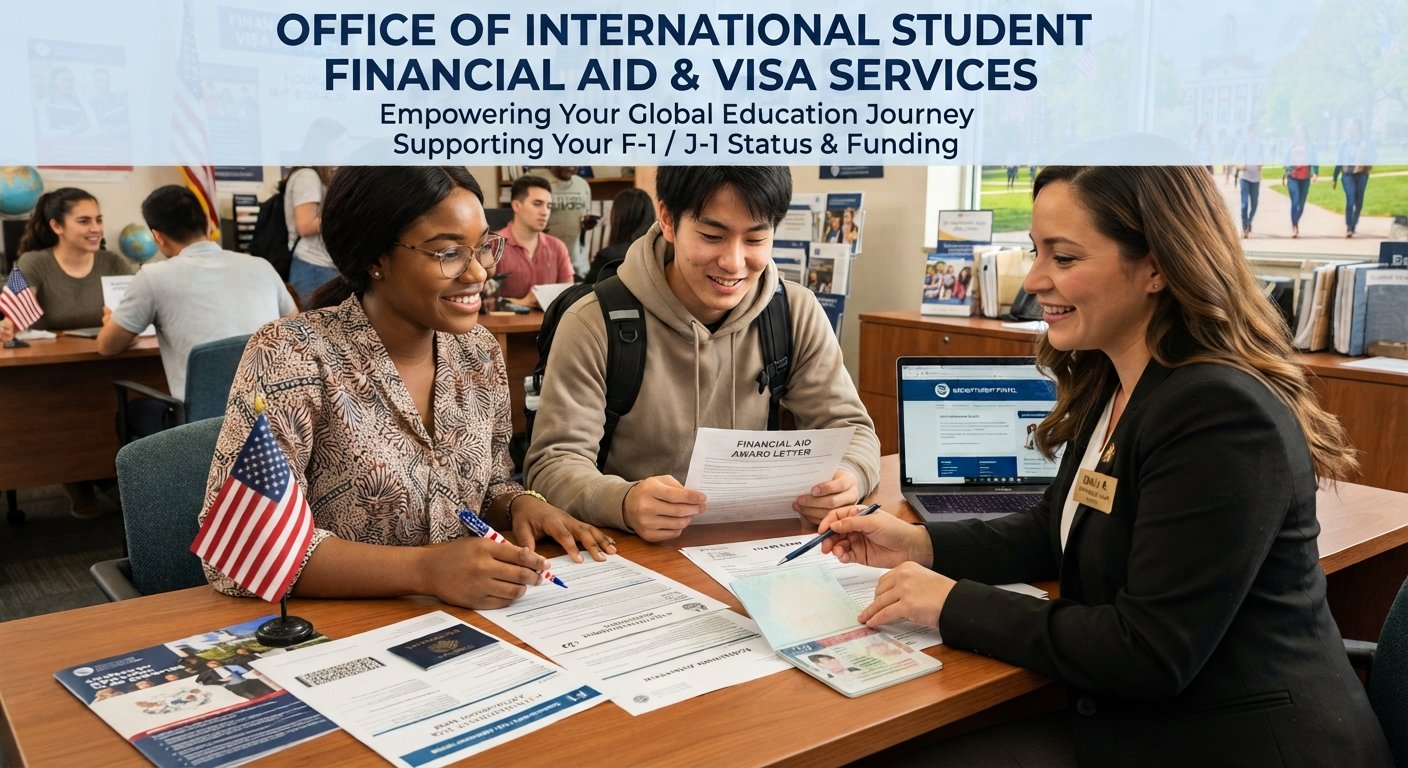
This guide is the first in the Road to Success series of guides for prospective students who plan to apply to the fall 2026 intake cycle. The primary purpose of this guide is to familiarize students with how scholarships and financial aid are given to international students who wish to pursue studies in the US.
While high school and gap year students can study in the US without spending any money, some of them get scholarships which pay 100% of the cost of education. However, this is not an automatic process. There are some steps which one needs to follow in order to have a chance to receive such financial aid.
Scholarships and financial aid are the two forms of financial help which one should be aware of.
Merit Based Scholarships
Scholarships that are merit-based depend entirely on the academic performance and achievements of the applicant outside of the classroom.
The university may consider things like the student’s grades, their extracurricular activities, leadership and community service involvement, and the overall competitiveness of the student among all other candidates.
Merit scholarships are open to international as well as domestic applicants. In case the applicant is awarded one, there will be information about the scholarship in his admission letter. That means, either he gets an annual award for four years, or just once during the entire course of education.
Financial Aid
However, financial aid is not the same thing as merit scholarships since it is mostly concerned with the financial position of the family.
The income of the parents or the legal guardian, household size, assets, costs, and the number of dependents will be examined when calculating the financial need of the student.
At the time of application, a student will have the option of declaring his/her eligibility for financial aid. It would appear to be an easy yes-or-no question, but it can turn out to be quite significant.
The university will know that the family will be unable to comfortably pay for the tuition if the student states his/her need for financial aid. However, if the student claims no need, he/she will imply that he/she can afford to pay the tuition without any financial help.
As per the guide, such a choice usually cannot be revised after submitting the application form.
Need-Blind and Need-Aware Universities
Here is where the distinction between a need-blind and need-aware university is crucial.
In the case of need-blind universities, application for financial aid has no influence on admission. Financial situation of the student is not taken into account by the university when the decision whether to admit him or her is made.
However, there is one catch.
Most universities are need-aware. That means that the need of the student to receive financial aid is a part of the admissions process.
Consider this example. There are two students who have more or less similar academic achievements, extra-curricular activities and profiles overall. But one of them requires financial aid while the other does not. In need-aware university, the former has better chances than the latter.
So, when it comes to international students, seeking financial aid may hinder your chances of admission.
Can You Get a Scholarship and Financial Aid Together?
Yes. A student can get both of those awards.
As an illustration, a student can get a $20,000 merit-based scholarship and also $40,000 in financial aid. This would give them a combined sum of $60,000 per year.
Dependent upon the cost of the institution, this can be sufficient to pay for their tuition and accommodation.
The reason why this is so vital is that a full ride does not have to necessarily come from a single scholarship. At times, a full ride is made up of both financial aid and scholarships.
Applying for Financial Aid
Financial aid applications are often made separately from college applications.
In the United States, the most commonly used application is known as FAFSA, an acronym for Free Application for Federal Student Aid.
The application seeks information on issues like parents’ earnings, family assets, family ownership of a house, monthly expenses, number of siblings in college, and more.
It has its own deadlines and should be submitted annually for the student to continue getting financial aid.
Grants and Loans
There are various forms of financial aid available.
A grant refers to money that doesn’t need to be repaid. In other words, when a student gets a $40,000 grant, he can use it on his education, and there won’t be a need for him to repay that amount.
Loans refer to money that needs to be repaid by the student. When a student gets a $20,000 student loan, he can use it for his education purposes, but later he will have to repay the money.
Since the process of financial aid is complex, students must do it in consultation with their parents or guardians.
CSS Profile for International Students
International students who lack US tax return will most likely use the CSS Profile in case the university requires it to apply for financial aid.
The CSS Profile provides information on family finances. It includes parents or guardian’s income, foreign tax information, family size, and other information on financial status.
This information is used by the university to determine the amount of financial aid that the student can get.
Students may have to repeat the process every year in order to be eligible for financial aid.
Be Honest About Your Finances
Students should never give false financial details.
Institutions can require documentation to confirm the accuracy of the details given in the application for financial aid. Students, for instance, will need to show some documentation that proves the income and assets declared in the application are correct.
Some international students may assume that by reducing their income and assets, they are likely to get the financial aid. This could cause them major problems.
If an institution finds out that the details provided were deliberately wrong, then the student will be disqualified from receiving the aid.
The best course of action would be to just give correct details.
Admission Comes First
And there is one thing that the students must never forget: admission is a priority.
Even though a student requires a large amount of financial assistance, it is impossible for him/her to get the financial aid offered by the college unless he/she gets accepted by it first.
Another point that the students must take into consideration is the deadlines for filling out their application forms. For instance, if a student wishes to apply for financial aid through the Common App but fails to submit the mandatory FAFSA/CSS Profile form, he/she will not receive financial aid for that particular year.
The student will have to wait till the next academic year.
Funding for Graduate Students
Funding of master’s degree and PhD students is slightly different from funding of undergraduate students.
As opposed to financial assistance, graduate students usually obtain funds in form of teaching and research assistantships.
Research Assistantships
The Research Assistantship is often associated with working under the supervision of a professor or a research team.
Students may assist the professor or researchers in their lab and projects and get paid for about 10, 15 or 20 hours of work weekly.
Teaching Assistantships
Teaching Assistantships or TAs include helping professors with various duties related to their teaching job.
It could be grading students’ works, answering their questions, conducting office hours, conducting exams and even lecturing on basic courses.
The amount that a student gets will vary from university to university depending on the location of the institution. According to the guide, the sum will average at around $15,000-$25,000 per year.
This money is sufficient for a student who lives with roommates and manages expenses wisely to cover most of their living and food expenses.
Master’s Scholarships
There are also some universities which offer merit scholarships for master’s students.
For instance, the guide states that NYU offers merit scholarships to some of its master’s students ranging from $10,000 to $15,000.
Nevertheless, even this amount might not fully cover a major portion of the cost if tuition exceeds $50,000. This is why students need to always take into account what kind of financial help will be provided by their respective universities.
Special Funding Opportunities
There are also some universities which have unique or more advantageous funding programs.
The guide gives an example of such universities as Dartmouth College. This institution provides need-based financial aid through the CSS Profile for some of its master’s students; eligible students get 50% of tuition as financial aid.
In addition, there are some other top-tier universities which have similar policies providing substantial tuition support for students coming from families with lower incomes; these universities include Harvard, MIT, Stanford, and Cornell.
The requirements for these programs vary from university to university and students should always make sure what their university requires from them.
Another special financial aid offered by Cornell is the Tata Scholarship covering full tuition for qualifying international students.
Competitiveness in a Student
It is one of the biggest faults of many students to put all their attention on scholarships while ignoring admissions.
The first priority has to be admissions.
In order to get into some big scholarship competitions and financial help programs, the student will need to develop a powerful application. Grades do matter, yet along with grades, there has to be something special about the applicant: extracurriculars, essays, or any other qualities that can distinguish him or her from others.
In the case of highly competitive schools, grades might not be enough, since there are hundreds of applicants that might have high grades as well.
Joining the Conversation
If there are specific colleges to cover in future breakdowns individual deep-dives into the Road to Success series where the whole process is explained for each college specifically suggestions are always welcome.
Related Post
- Scotland Pakistan Scholarships for Young Women and Girls 2026-27
- Qatar Scholarships 2026-27 for International Students
- Turkey Scholarships 2026
- Chevening Scholarship in Brazil 2026

Welcome to TopJobNotis. I am Afsa, and I share useful information about government schemes and scholarships, along with simple guides to help you understand eligibility criteria, application processes, deadlines, and important updates




One Comment on “US Financial Aids & Visa for International Students”