
The ARES Scholarship in Belgium 2027-28 offers an excellent opportunity for international students and professionals to pursue advanced education in Belgium. Funded through the Belgian development cooperation program, the scholarship supports selected candidates who want to gain specialized knowledge and practical skills through eligible study programs. It may cover important expenses such as tuition fees, international travel, living costs, and insurance, depending on the scholarship conditions.
The program is designed to support students from eligible developing countries and help them contribute to the development of their communities after completing their studies. Understanding the eligibility criteria, application process, available programs, and financial benefits is essential for applicants planning to apply for the ARES scholarship.
ARES Scholarship in Belgium 2027-28 Overview
The ARES scholarship programme is designed for applicants from eligible developing countries. It supports selected advanced higher education and training opportunities in Belgium. The programme is connected with ARES, which stands for Académie de Recherche et d’Enseignement Supérieur. Institutions in the Wallonia-Brussels Federation offer selected programmes.
The opportunity is more focused than a general university scholarship. ARES does not fund every programme at every Belgian university. Instead, applicants must choose an eligible study programme included in the relevant ARES scholarship call. The available study and training areas include subjects such as agriculture, health, economics, information technology, and international development.
| Scholarship Feature | Details |
| Programme | ARES Scholarship |
| Country | Belgium |
| Provider | ARES |
| Study region | Wallonia-Brussels Federation |
| Study levels | Specialised Bachelor’s and Master’s |
| Training | Continuing education |
| Target group | Applicants from eligible partner countries |
| Application | Online |
| Current source cycle | 2026–2027 |
| Current source deadline | 18 September 2026 |
The current source reports 130 scholarships for specialised Bachelor’s and Master’s programmes and 70 scholarships for continuing education for that call. These figures belong to the referenced call and should not automatically be treated as confirmed numbers for 2027-28.
ARES Scholarship 2027-28 Financial Benefits
One major attraction is the ARES scholarship financial benefits. The scholarship provides ARES funding for study or training in Belgium. Depending on the programme and conditions, support may cover several important costs.
The available source lists international travel expenses, a subsistence allowance, registration fees, visa costs, insurance, and tuition-related support for eligible specialised Bachelor’s and Master’s programmes. The exact package can depend on the programme. Therefore, applicants should never assume that every cost will be covered in the same way.
| Financial Support | What It Means |
| International travel expenses | Support related to travel to Belgium |
| Subsistence allowance | Financial support for living expenses |
| Registration fees | Support for applicable registration costs |
| Visa costs | Support for eligible visa expenses |
| Health insurance | Insurance support under scholarship conditions |
| Tuition-related support | Applicable support for selected programmes |
This makes ARES an important fully funded scholarship in Belgium to investigate. Still, the phrase “fully funded” should be understood through the official funding conditions. Funding can vary according to the selected programme and the applicable scholarship rules.
ARES Scholarship Academic Programs and Courses
The ARES scholarship programs cover selected advanced education and training opportunities. The source identifies specialised Bachelor’s programmes, specialised Master’s programmes, and continuing education courses. Some continuing education options can last around two to six months.

The programme list is important because ARES funding does not automatically apply to every course in Belgium. Applicants should first identify the ARES eligible programs. They should then compare the programme requirements with their own academic background and professional experience.
Academic Programs for the ARES Scholarships 2027-28
The available ARES courses focus on development-related academic and professional needs. The source lists fields including agriculture, aquaculture, health, food technology, economics, international development, information technology, geographic information systems, environmental studies, human rights, and microfinance.
These subjects show the wider purpose of the programme. ARES is not simply an ordinary university funding scheme. It connects advanced education with skills that may contribute to development in applicants’ home countries.
For Advanced Bachelor’s Programs
A specialised bachelor’s programme is one of the study routes supported by the ARES programme. Applicants need the academic qualification required by their chosen programme. The source states that specialised Bachelor’s applicants generally need a relevant first-cycle qualification or equivalent.
The exact admission rules can differ between programmes. Therefore, your academic background should be checked against the selected programme before you begin the scholarship application. Scholarship eligibility and academic admission are connected, yet they are not identical.
Advanced Master’s Programs
A specialised master’s programme gives qualified applicants a route toward advanced expertise in a selected field. The source states that applicants for specialised Master’s programmes generally need an appropriate second-cycle qualification or equivalent.
Professional background can also matter. ARES requires relevant professional experience under the conditions described in the current call. This makes the programme particularly relevant to graduates who already have practical experience in a development-related field.
For Advanced Continuing Education Programs
Continuing education courses provide another route for applicants who want focused professional or academic training. The source describes these programmes as lasting approximately two to six months.
This route can be useful for professionals who want to strengthen a specific skill without entering a longer degree programme. Such professional training in Belgium can also support international academic mobility and professional development. Applicants must still satisfy the requirements of their chosen programme.
Some Other Trending Opportunities
If ARES does not match your academic background or nationality, you can also research other international funding opportunities. Different programmes use different eligibility rules. Therefore, one scholarship being unavailable does not mean that every international opportunity is closed to you.
The following opportunities can be presented as related scholarship or internship content. Their dates and conditions should be checked separately before publication because they are not part of the ARES programme.
UNDP Internship 2027 in USA Paid Internships
UNDP internship opportunities can be relevant to students and graduates seeking international professional exposure. Internship requirements, locations, stipends, and application periods depend on the specific vacancy. Always check the individual opportunity before applying.
Commonwealth Master’s Scholarships 2027 in the UK Fully Funded
Commonwealth Master’s Scholarships are another type of international scholarship for eligible applicants. They are separate from the ARES programme and have their own country requirements, participating institutions, application process, and deadlines.
CRG Research Training Program 2026-27 in Spain Fully Funded
The CRG Research Training Program offers a research-focused route for eligible applicants. Students interested in scientific research can compare its requirements with their academic background. Programme dates and funding conditions should be verified from the relevant official source.
Commonwealth PhD Scholarships 2027 in the UK Study Free in the UK
Commonwealth PhD Scholarships provide another potential route for doctoral study. They should not be confused with ARES scholarships because the two programmes have different eligibility rules and application systems.
Eligibility Criteria
The main ARES scholarship requirements include being a national of an eligible partner country and living and working in an eligible partner country. Applicants also need the required academic qualification and sufficient language ability for the selected programme.
The current source also requires at least two years of relevant professional experience in a partner country. Degree age limits can apply as well. Because these conditions belong to a specific call, applicants should compare them with the official 2027–28 rules before submitting an application.
| Requirement | Current Source Information |
| Nationality | Eligible ARES partner country |
| Residence/work | Live and work in an eligible partner country |
| Academic qualification | Required qualification for the programme |
| Professional experience | At least two years of relevant experience |
| Language | Sufficient command of programme language |
| Programme choice | One ARES programme |
| Admission | Programme-specific requirements also apply |
Don’t Miss a Single Opportunity
A common mistake is starting the application before checking eligibility. The better approach is simple. First, confirm your country. Then check the programme. After that, review your academic and professional background. Finally, prepare the required documents.
The current source specifically warns that eligibility does not guarantee selection. ARES evaluates eligible applications through a competitive selection process.
For applicants from Country, the first question should be whether the country appears in the current ARES partner-country list. Country eligibility is not something you should guess from older scholarship articles. The relevant call should always be checked before investing time in document preparation.
Eligible Countries
The current source describes 32 ARES scholarship-eligible countries. These include countries in Africa, Asia, Latin America, and other regions identified by the relevant call. The list includes Benin, Burkina Faso, Burundi, Cameroon, Ethiopia, Guinea, Côte d’Ivoire, Kenya, Madagascar, Mali, Morocco, Mozambique, Niger, the Democratic Republic of the Congo, Rwanda, Senegal, South Africa, Tanzania, Tunisia, Uganda, and Zimbabwe.
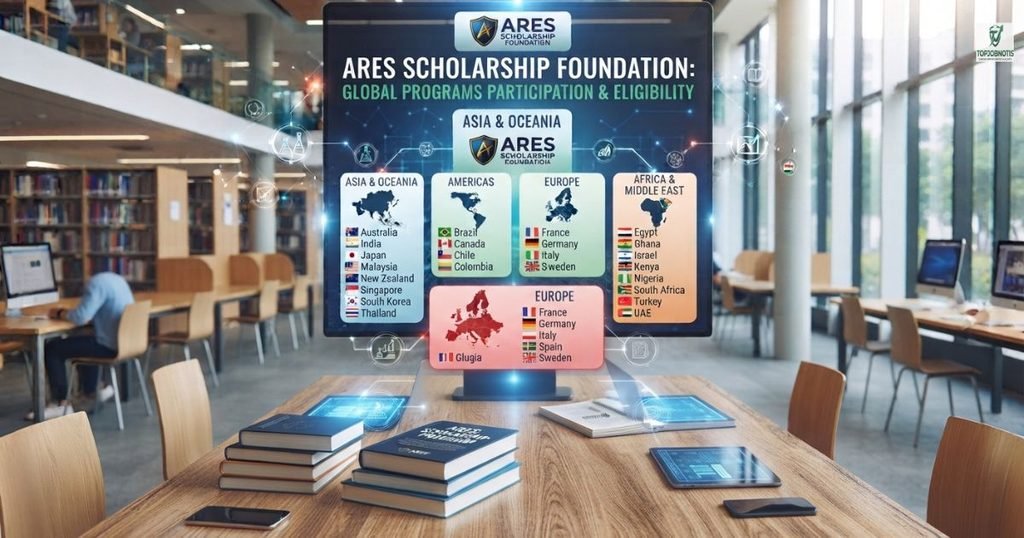
The same source also lists Bolivia, Cuba, Ecuador, Haiti, Peru, Cambodia, Indonesia, Nepal, the Philippines, Vietnam, and Palestine. It states that Pakistan is not included in the current 32-country list. This information relates to the supplied 2026–2027 source and should be rechecked when the 2027-28 call is released.
| Region | Examples Listed in the Current Source |
| Africa | Kenya, Morocco, Rwanda, Senegal, Tunisia |
| Latin America | Bolivia, Cuba, Ecuador, Haiti, Peru |
| Asia | Cambodia, Indonesia, Nepal, Philippines, Vietnam |
| Other listed partner | Palestine |
The list of ARES partner countries can change between scholarship cycles. Therefore, an applicant should never rely on a list copied from an old article. The latest official ARES scholarship call should be the final reference.
Required Documents
Preparing supporting documents early can make the application much easier. Applicants should collect their academic documents, evidence of professional experience, identification information, and other materials required by the selected programme.
Your documents should support the information entered in the application. For example, if you claim professional experience, your professional documents should clearly support that experience. Likewise, your academic documents should demonstrate the qualification required for your selected programme.
| Document Category | Typical Purpose |
| Academic documents | Confirm academic qualification |
| Professional documents | Confirm relevant professional experience |
| Identification | Confirm personal identity |
| Programme documents | Meet programme admission requirements |
| Language evidence | Demonstrate required language ability |
| Supporting documents | Provide additional required information |
The exact document list should be checked against the current ARES scholarship application procedure and selected programme. The source confirms that applicants must upload the requested supporting documents through the online system.
Application Process:
The ARES scholarship application process is completed online. Applicants first review eligible countries and programmes. They then select one suitable programme and check its academic and professional requirements. After preparing the required information and documents, they complete the online application and submit it before the deadline.
The current source states that applicants need to create a GIRAF account and complete the scholarship application form online. It also states that candidates should not apply for multiple programmes because the current conditions permit only one programme application.
Step 1 Check Your Eligibility
Begin by checking your nationality and residence status. Then compare your academic qualification and professional experience with the scholarship rules. Finally, review the language requirements and programme admission requirements.
This first check can save considerable time. There is little value in preparing a complete application for a programme that you cannot legally or academically enter.
Step 2 Choose an Eligible Program
Next, identify an eligible study programme that matches your academic and professional profile. ARES supports selected programmes rather than every course available at Belgian universities.
Read the programme requirements carefully. Look at the qualification level, relevant experience, teaching language, duration, and other admission conditions. Your selected programme should be a logical continuation of your previous education or professional work.
Step 3 Prepare Your Documents
Now prepare your academic and professional evidence. Check names, dates, qualifications, and other information carefully. Any mismatch can create confusion during application review.
Keep digital copies of every document you upload. Also check the required file format and any translation rules specified by the application system or selected institution.
Step 4 Complete the Application
The ARES scholarship application form is completed through the online application system. The current source says applicants must provide academic, professional, and personal information and upload the requested supporting documents.
The ARES online application should be completed carefully. Read every field before submitting it. A rushed application can contain simple errors that are avoidable with one final review.
Step 5 Submit Your Application
Before submission, check the selected programme, personal information, academic details, professional experience, and uploaded documents. Then submit the application before the official closing time.
Do not wait until the final minutes. Technical problems, slow uploads, or missing documents can become serious obstacles near a deadline.
Step 6 Check Application Status
After submission, keep monitoring your scholarship application status and official communications. Save any confirmation or reference information provided by the system.
Selection is not automatic. Even if you satisfy the eligibility conditions, ARES can assess your application through a competitive process.
Deadline:
The ARES scholarship deadline is one of the most important details to verify before applying. The supplied source states that the current 2026–2027 call closes on 18 September 2026 at 12:00 noon Belgian time (UTC+1).
That date should not automatically be used as the confirmed deadline for the 2027–28 call. The correct approach is to update this section when ARES publishes the new call. Scholarship deadlines can change between cycles.
| Deadline Information | Current Source |
| Current call | 2026-2027 |
| Deadline | 18 September 2026 |
| Closing time | 12:00 noon |
| Time zone | Belgian time, UTC+1 |
| Application method | Online |
Applicants should therefore treat the official 2027-28 announcement as the final authority. An old deadline is like an expired ticket. It may explain the route, but it cannot get you through the gate.
Selection Process
The scholarship selection process begins after applicants submit their applications. First, applications must satisfy the relevant eligibility conditions. ARES then evaluates eligible candidates through a competitive selection process.
Academic background, professional experience, programme suitability, and other information can matter during assessment. However, the supplied source does not provide a detailed scoring formula. Therefore, applicants should not assume that a particular grade or experience level guarantees selection.
Note: “Meeting the eligibility conditions does not automatically guarantee selection.”
The selected programme also matters because scholarship eligibility and academic admission are related but separate. A candidate should satisfy both the general ARES conditions and the programme admission requirements of the chosen course.
FAQs
Which countries are eligible?
The current source identifies 32 eligible partner countries. The list includes countries across Africa, Asia, Latin America, and other regions. Applicants should check the latest ARES scholarship eligible countries list because eligibility can vary by call.
How can I apply?
You apply online through the ARES application system. The current source says applicants create a GIRAF account, complete the online application form, upload the required documents, and submit before the official deadline.
When is the ARES Scholarship deadline?
The supplied source gives 18 September 2026 at 12:00 noon Belgian time for the current 2026–2027 call. This should not be treated as the confirmed 2027–28 deadline until ARES publishes the new call.
Can I apply for more than one ARES programme?
The current source states that applicants may apply for only one ARES scholarship programme. Selecting the right programme is therefore an important part of the application strategy.
Does meeting the eligibility criteria guarantee an ARES Scholarship?
No. Meeting the conditions makes an applicant eligible for consideration. ARES then evaluates eligible applications through a competitive selection process.
Final Thoughts
The ARES Scholarship in Belgium 2027-28 can provide an important funded study opportunity for eligible applicants who want advanced education or professional training in Belgium. Its selected programmes cover several development-related fields. The programme also connects study and training with international academic mobility.
If your goal is to access scholarships in Belgium for international students, start with eligibility rather than the application form. Check your country first. Then select an eligible programme. After that, prepare your academic and professional documents and follow the official application procedure carefully.
The most important lesson is simple: do not rely on an old scholarship article for a new application cycle. The supplied source describes the 2026–2027 call. The final ARES scholarship call for 2027–28 should be checked for the latest countries, programmes, funding, requirements, and deadline before you submit anything.
Related Post
- Scotland Pakistan Scholarships for Young Women and Girls 2026-27
- Qatar Scholarships 2026-27 for International Students
- Turkey Scholarships 2026
- Chevening Scholarship in Brazil 2026
- Helsinki University Scholarships 2027-28

Welcome to TopJobNotis. I am Afsa, and I share useful information about government schemes and scholarships, along with simple guides to help you understand eligibility criteria, application processes, deadlines, and important updates


One Comment on “ARES Scholarship in Belgium 2027-28 Fully Funded Belgium Government Scholarship”